
Creek Jenkins
Well-known member
It’s the little details that would make the overall effect better. 



Correct if they don't do a very good job of neatly securing the wires running throughout the unit which I'm certain leads to a few shorts and open circuits.They surely aren't concerned about the aesthetics of the ceiling trim.I’m not explaining myself well. It looks to me like they don’t have a drawing for the divider. If they did it would have a cutout for the AC. Leaves the final fit decision up to assembly.
Wild wiring mess can be solved by a very old invention, the wiring harness.
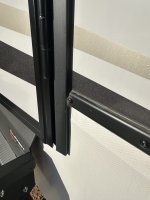 They are doing a good job on the outside trim, I have seen other more expensive units from other manufacturers that are running the horizontal trim under the door trim instead of butting it, creating a potential leak. All the trim on our coach was done correctly.
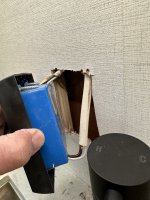 I fixed the “floating” outlet in the bathroom (why is it right next to the faucet?). There were two “studs” on either side of it, I managed to angle four 1 1/2” screws at a 45 and catch them. Solid as a rock now. Hole in the wall looks like it was chewed by a beaver.