

Chaseweston
Well-known member
We converted our garage to the kids room when we first went out and when boondocking in 30s/40s, the unit could never balance heat on the furnace alone. The front bedroom would be 85 degrees and the garage would be in the low 60s and the thing would run non stop. We went through a 30lb bottle in two days trying to keep the kids comfortable and it used a lot of battery running the furnace constantly. We have an on board generator but as a matter of principle, I wanted to run the unit comfortably with generator only as backup if we didn't get sufficient sun for a couple days.
Since the furnace is so far forward, there is too much static pressure in the duct to the garage to get sufficient heat into that area. All the heat was dumping in the front bathroom and bedroom and some in the main living area.
My fix instead of booster fans and still relying on the furnace sucking down propane at an astronomical rate was to install a diesel heater. They are cheap, diesel fuel is a little less than twice the energy density as propane, is cheaper per gallon, and is readily available.
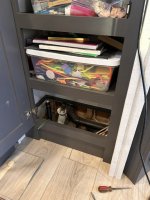
On our 44V14, I settled on the coffee nook bottom shelf as the location as I could tie into the existing ductwork behind the fireplace easily and route the intake and exhaust through the floor outside of the frame member. Unfortunately there is a drain line under there that I did not feel like reworking so I worked around it and positioned the heater unit to avoid it. I cut out a return grill in the toe-kick to pull air in from the main cabin area and connected the output to the existing duct running behind the fire place. I blocked off the original feed from below deck and repurposed one of the T's that was in there to cut in a vent under the fireplace to feed the main living area as the fireplace does with normal power. I installed the fuel tank in the door side propane compartment on the side wall since there was a large dead space in front of the propane tank there and it is "outside". To refuel, just open the door, remove the fuel cap, and fill the tank. To finish it off, I cut the piece of finished cabinet bottom that I removed and used magnetic cabinet latches I had lying around to affix the removable panel. I taped the cut line to protect the finish layer during the cut and then proceeded to rip some of it off removing the tape... I'll fix that later as its purely cosmetic, but bothersome nonetheless.
For the through-floor exhaust and intake, I first cut two holes slightly larger than the diameter of the exhaust and intake and fuel line in the photo, but during testing, that admittedly melted the flooring material and was a fire risk. I've seen people do it this way on youtube on other trailers and it was the easiest approach to start since I already had the hole saws but I don't recommend. I ordered the deepest floor plate I could find on amazon and a 5" hole saw and bit the bullet drilling a big ole hole in the floor to the outside. I then installed the floor plate with high heat rtv and slipped the exhaust and intake through the holes. I sealed around the holes with red rtv as well and foil taped the underside all around. For the fuel line, the rubber hose sections used as "connectors" for my hard line fit snug in the fuel line hole and are acting as a bulkhead to seal that. Fuel pump is in a 4sq box mounted to the frame to protect it. I didn't take photos of the floor hole and final setup since it was cold and windy boondocking on the wall in SD and I wanted to get it done and working but next time I go to the unit, I'll snap a few photos of the final result and the fuel tank location for reference.
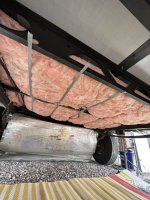
I also installed actual insulation between each floor joist in the rear of the unit to keep the heat in since the "just for show" insulation that was in there from the factory was useless.
Now the unit balances to within a couple degrees across the whole unit and the furnace comes on maybe 15-20% what it did before when trying to heat the whole rig.
If you're looking for a better heat source boondocking with a rig this large and use the garage as living space, look into it!


Since the furnace is so far forward, there is too much static pressure in the duct to the garage to get sufficient heat into that area. All the heat was dumping in the front bathroom and bedroom and some in the main living area.
My fix instead of booster fans and still relying on the furnace sucking down propane at an astronomical rate was to install a diesel heater. They are cheap, diesel fuel is a little less than twice the energy density as propane, is cheaper per gallon, and is readily available.
On our 44V14, I settled on the coffee nook bottom shelf as the location as I could tie into the existing ductwork behind the fireplace easily and route the intake and exhaust through the floor outside of the frame member. Unfortunately there is a drain line under there that I did not feel like reworking so I worked around it and positioned the heater unit to avoid it. I cut out a return grill in the toe-kick to pull air in from the main cabin area and connected the output to the existing duct running behind the fire place. I blocked off the original feed from below deck and repurposed one of the T's that was in there to cut in a vent under the fireplace to feed the main living area as the fireplace does with normal power. I installed the fuel tank in the door side propane compartment on the side wall since there was a large dead space in front of the propane tank there and it is "outside". To refuel, just open the door, remove the fuel cap, and fill the tank. To finish it off, I cut the piece of finished cabinet bottom that I removed and used magnetic cabinet latches I had lying around to affix the removable panel. I taped the cut line to protect the finish layer during the cut and then proceeded to rip some of it off removing the tape... I'll fix that later as its purely cosmetic, but bothersome nonetheless.
For the through-floor exhaust and intake, I first cut two holes slightly larger than the diameter of the exhaust and intake and fuel line in the photo, but during testing, that admittedly melted the flooring material and was a fire risk. I've seen people do it this way on youtube on other trailers and it was the easiest approach to start since I already had the hole saws but I don't recommend. I ordered the deepest floor plate I could find on amazon and a 5" hole saw and bit the bullet drilling a big ole hole in the floor to the outside. I then installed the floor plate with high heat rtv and slipped the exhaust and intake through the holes. I sealed around the holes with red rtv as well and foil taped the underside all around. For the fuel line, the rubber hose sections used as "connectors" for my hard line fit snug in the fuel line hole and are acting as a bulkhead to seal that. Fuel pump is in a 4sq box mounted to the frame to protect it. I didn't take photos of the floor hole and final setup since it was cold and windy boondocking on the wall in SD and I wanted to get it done and working but next time I go to the unit, I'll snap a few photos of the final result and the fuel tank location for reference.
I also installed actual insulation between each floor joist in the rear of the unit to keep the heat in since the "just for show" insulation that was in there from the factory was useless.
Now the unit balances to within a couple degrees across the whole unit and the furnace comes on maybe 15-20% what it did before when trying to heat the whole rig.
If you're looking for a better heat source boondocking with a rig this large and use the garage as living space, look into it!